Mikes, Mikes......
Microphones were an essential part of WWII aircraft avionics, but the two basic mikes used today by
military collectors and radio amateurs are typically more from the late 1930s and the early part of the war.
In the 1930s, U.S. air services did some experimentation between carbon and dynamic microphone technology. However, by the end of
the decade, they had settled on carbon mikes for a number of reasons. They were pretty near indestructible,
they needed very little amplification, and there was already a vast manufacturing infrastructure created by the telephone
industry. Their shortcomings were few: carbon granules gradually became cemented over time, causing loss of response,
but flyers soon learned that rapping the microphone sharply on a metal part of the airframe would jar the granules loose
and restore the volume. Carbon mikes also have an inherent white noise spectrum output even with no sound on the diaphragm,
but in a noisy cockpit that was the least of anyone's worries.
In contrast, the British opted for a dynamic microphone for their aircraft, significantly superior to the carbon mike from
an intelligibility standpoint but tending to be more delicate and requiring an extra amplifier stage in their
radio sets/interphone systems to accommodate the lower output. The rapid proliferation of combined US/Commonwealth
operations generated several workarounds on the US side, including a
Packard Bell K-1 preamplifier to use British mikes in US aircraft, as well as an
M-299 attenuator to use American carbon mikes with Commonwealth compatible equipment (like the SCR-522, for example.)
The hand-held operation of the two most common types was fine when all you had in front of you was a stick and a throttle, but the increasing
needs of combat, not to mention the need for oxygen, drove the development of several "hands-free"
variations. The earliest of these "no hands" types was the throat microphone, an infernal device that was later described by a Bell Laboratories
engineering analysis as "a good idea but for the fact that the sound available from the larynx is basically unintelligible".
Higher altitudes forced the use of oxygen masks and offered a much better solution for intelligibility through an
integrated microphone element located in the mask. Because of their specialization (throat and oxygen masks are not
the most user friendly) and impracticality (in a ham shack at least), the hands-free alternatives are left to the
research of the reader. The one exception is the H-46/UR boom mike headset shown at
Headphones, which details some of
the earphone variations used during the war.
|
|
Old Faithful...the Signal Corps Ubiquitous Classic
The USAAC was pretty much stuck in a rut by 1941, settling on the venerable T-17 that is so familiar to just about
everyone. It replaced several "lollipop" designs used widely through the 1930s, and had the advantage of not requiring
a separate "push to talk" switch. It was also used in much of the ground equipment during WWII, resulting in its wide
availability on the surplus market after the war. It used a PL-68 microphone plug that was eventually renomenclatured as a PJ-068.
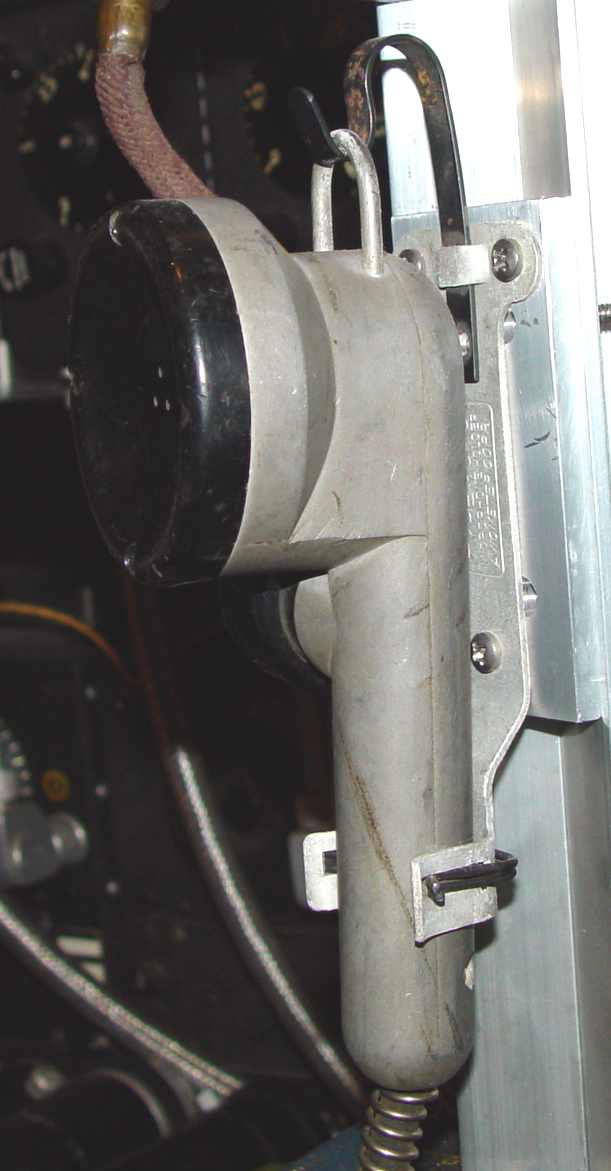
The T-17 is probably the most abused microphone ever made. Just hang it
on a convenient screw or toss it on the floor and forget it until you need to use it. However, there was at least
one effective "official" hanger made for it, shown at left. This one has only a manufacturer's number on it, not a
Signal Corps nomenclature.
T-17 Microphone and its hanger
|
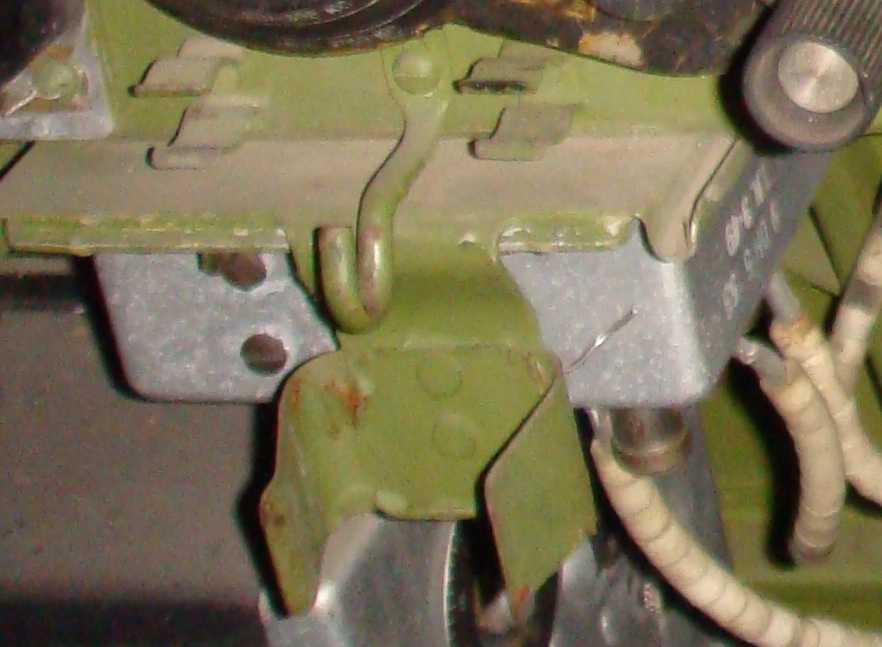
T-17 Microphone hanger provided by SNJ-4 aircraft manufacturer. The clips were
designed to stow the headphone end of a CD-307 extension cord when the pilot left the cockpit.
The apparent lack of a nomenclatured hanger didn't deter manufacturers from providing their own. The one above doubled as a mounting plate
for the transmitter antenna relay below it. Its only drawback was the static position it occupied in the plane, preventing relocation if combat
experience suggested such a move.
The Navy Standard
Naturally, the Navy couldn't use a Signal Corps microphone because it might contaminate their salty tradition, so they
used what has become an incredibly long lived design called the RS-38, or in Navy-speak, the NAF 213264-6 -
with an NAF 212938-1 plug on the end. There was essentially no difference between the Navy plug and the PL-68, except
at the base of the shaft where it entered the wiring end, there is a .303" diameter by .093" ferrule added there to
provide a salt spray baffle. A matching recess in the phone jack created a trap to resist spray in shipboard installations.
At the same time, absence of the recess did no harm to operation in those equipments that had a more protected environment.
It is possible to purchase a new RS-38 style mike with an updated dynamic or electret element even today, though they aren't
made in the US anymore.
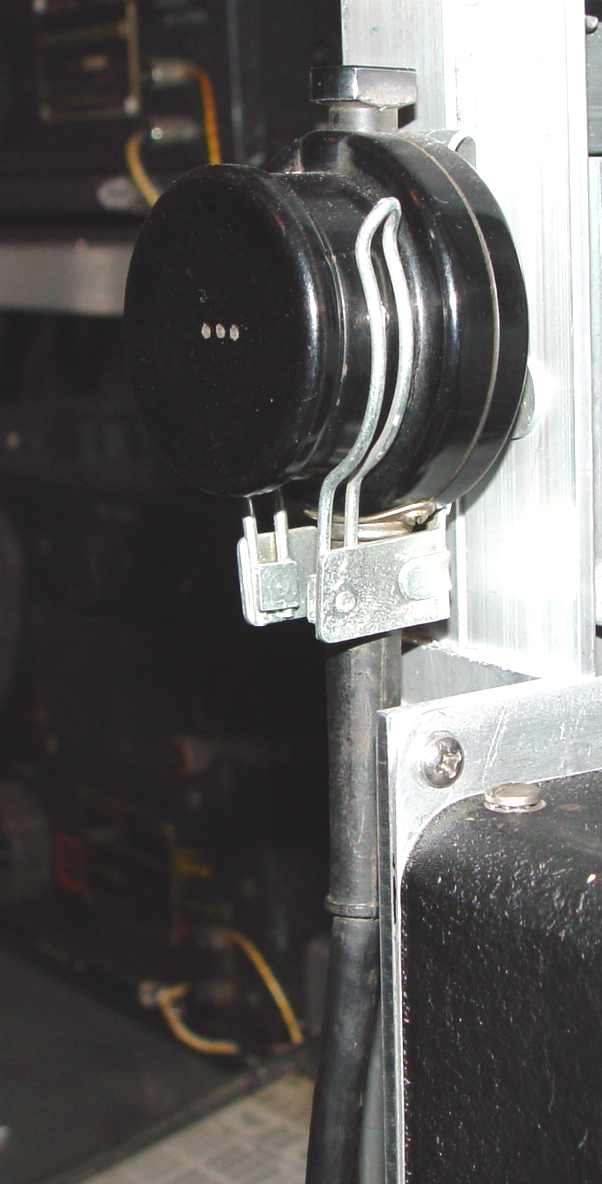
There were two different
types of microphone hangers produced for this microphone. The one on the right has an irritating habit of
scratching your new/old -38 unless you polish the sharp edges with a rubberized abrasive wheel, so use it with care.
RS-38 mike and its hanger (Type CVA 10189)
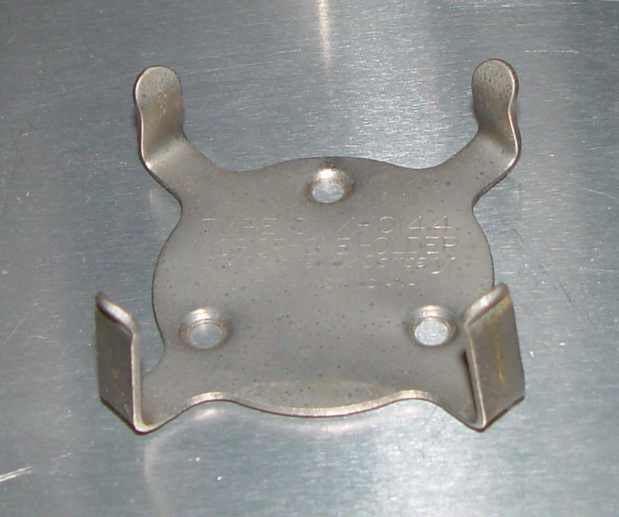
Another RS-38 mike hanger (Type CMX (Magnavox) 10144, also nomenclatured NAF 213264-2)
Photos abound of actual installations in aircraft, but the photo below may be of interest as it shows an RS-38 microphone
hanger in the cockpit of an OS-2U Kingfisher, the float plane typically carried on the fantail of a battleship for
reconnaissance.
Typical Navy 10144 mike bracket installation, this one in the rear seat of an OS-2U Kingfisher
Mircophone switches
Finally, there is another supporting category for aircraft microphones, and that is the subject of microphone switches.
It was easy enough when mikes had their own "press to talk" switches built into the microphone, but when throat and oxygen
mask microphones came into use, along with the first integrated headsets like the H-46/UR, some other method for turning on
the transmitter was necessary. That led to a variety of switches that were sometimes more common to a particular aircraft than
universally used. Initially the solution was to have a switch in the cable leading to the interphone jack box. It was clipped
to the flight suit with a lanyard, and was handy whenever you needed to communicate over the interphone or transmit with the HF or VHF transmitter.

Oxygen mask/throat microphone switch SW-141. This was also an integral part of peripheral installations like the Packard Bell K1 preamplifier mentioned above.
The problem with the clip-on concept was that it occupied a hand that might be needed for something else in combat.
That led to a move to floor mounted switches that were part of the aircraft. Below are some examples of those switches,
along with a note about their application when necessary. Some of them were adapted from floor mounted automotive headlight
dimmers used up through the fifties. Remember those?

SA-47A/AIC used in the B-29 and some other late wartime aircraft. These required a mounting plate of some sort.
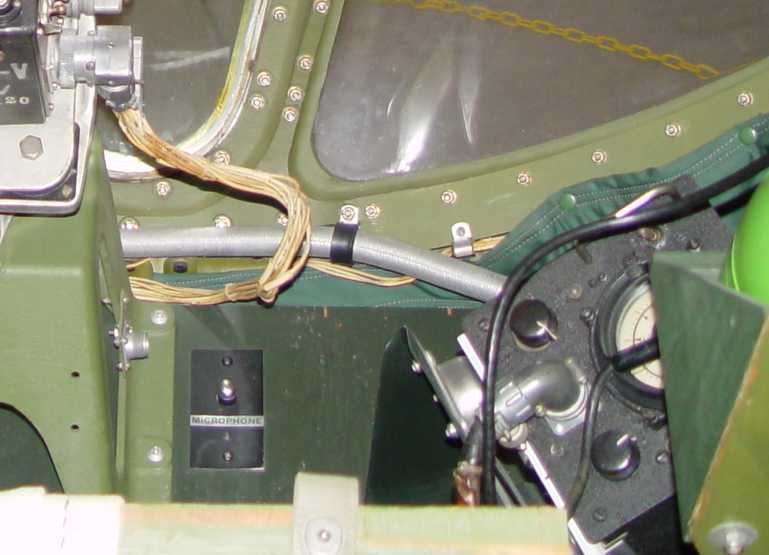
SA-47A/AIC shown mounted in the floor of the bombardier's station in the Enola Gay.
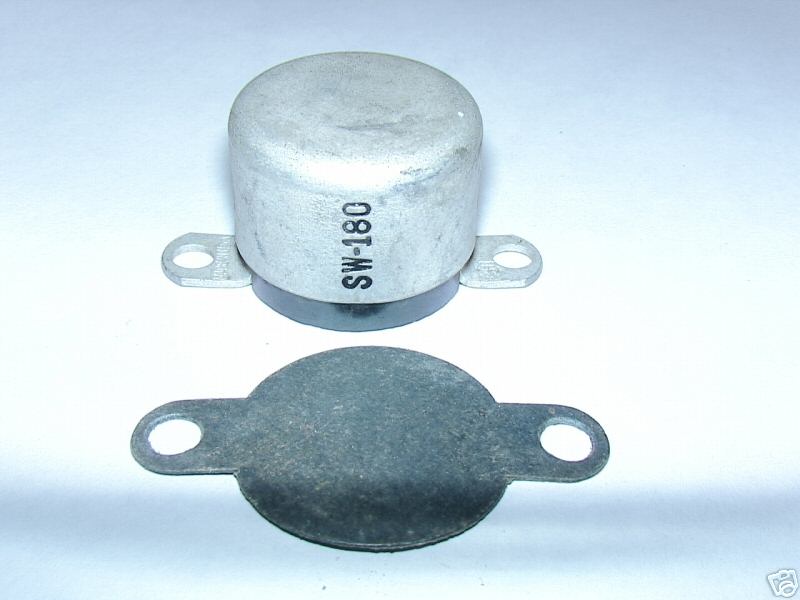
SW-180 floor switch. This one was a surface mount switch that did not require room behind a floor panel for installation.
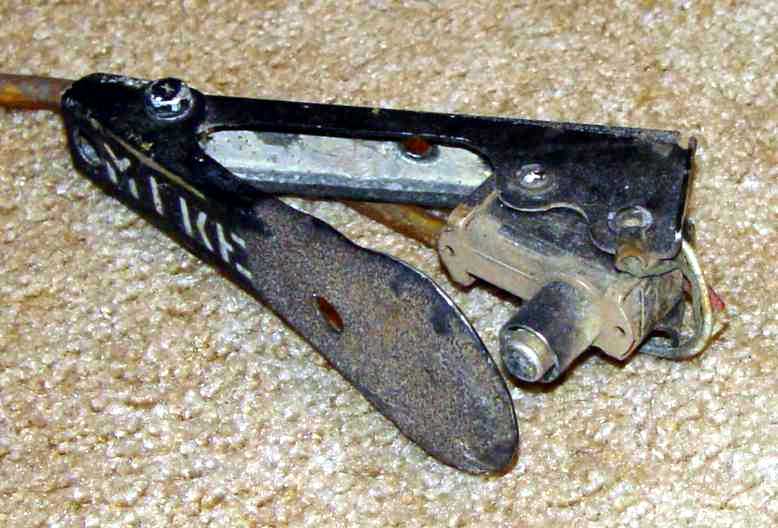
Another more sophisticated concept that was used in Navy patrol aircraft. Like the SW-180, this was bolted to the floor at the
particular flight crew station and was easier to find in the dark because of its size and shape.
Another hands-free approach was to mount the microphone switch directly on combat equipment, preferably in such proximity that only the movement of the thumb would be necessary
to activate the mike. This led to switches on brackets mounted on machine guns and on flight yokes, for example.
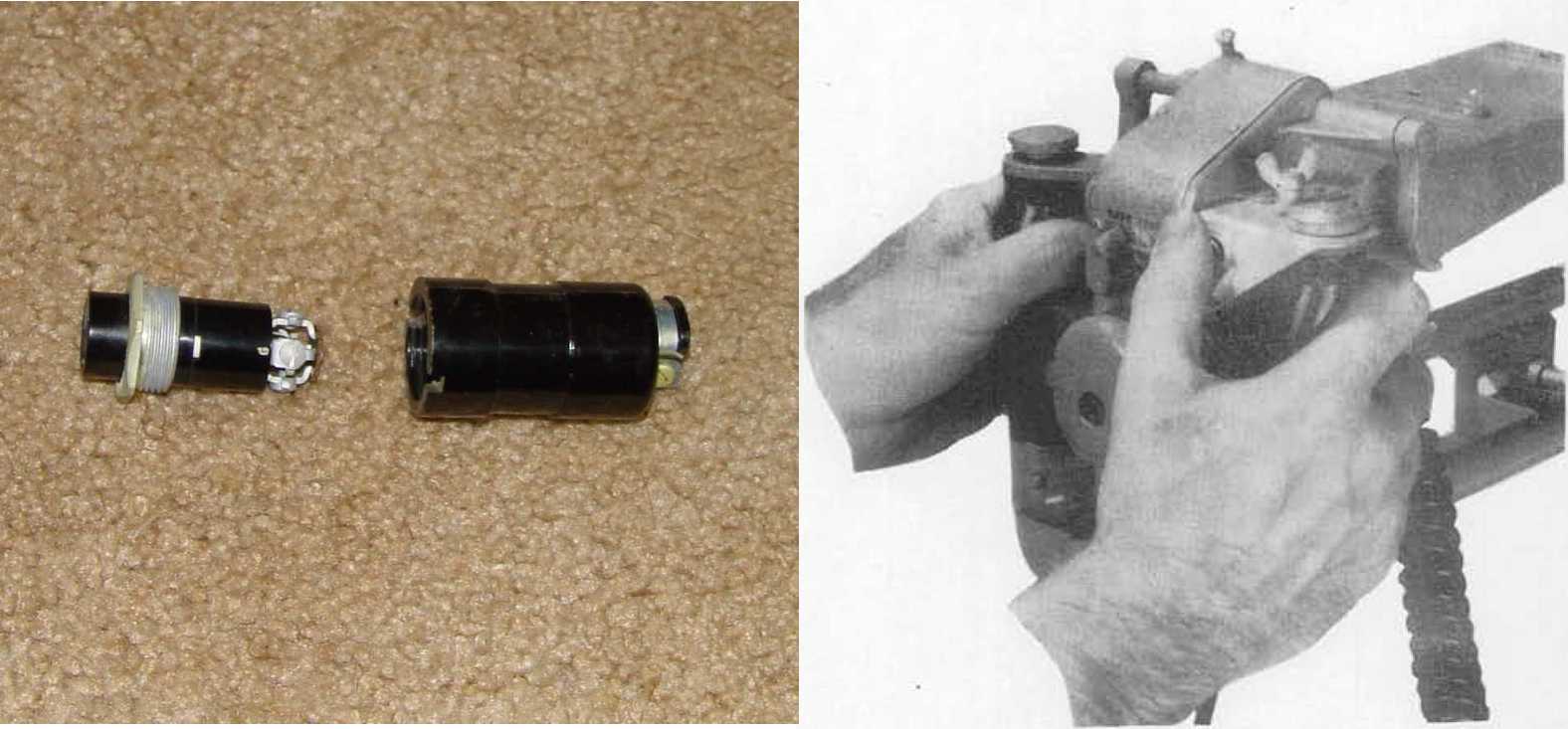
SA-26/U, introduced with the AN/AIC-2 interphone system toward the end of the war. A bracket of some sort was required to bring it to hand. Unlike the floor switch,
these were more difficult to keep depressed for longer transmissions, and were really intended only for short conversations.
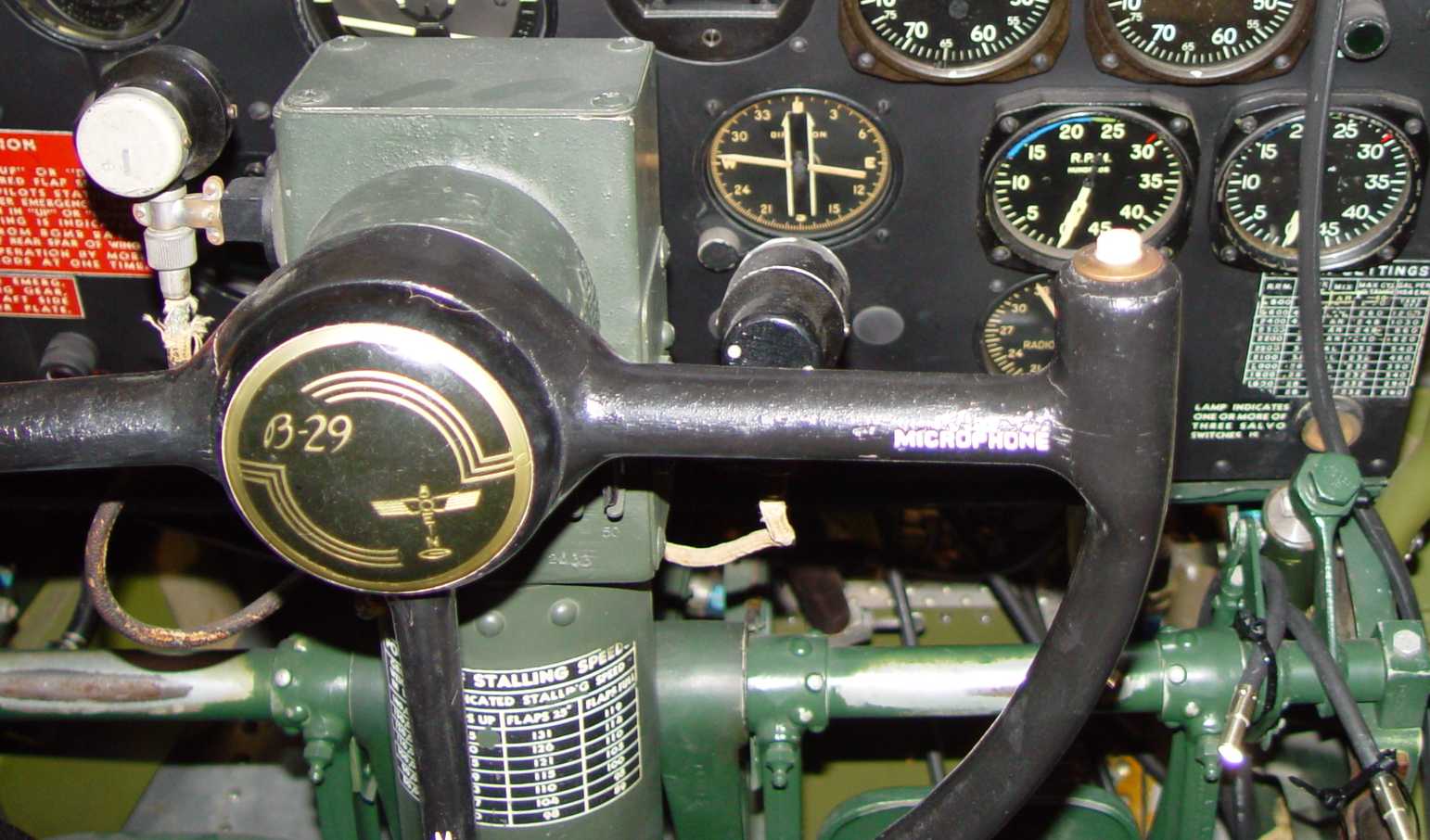
A similar switch was used on the aircraft pilot and copilot's yokes to ensure quick access, this one on the Enola Gay.
Return to Miscellaneous Peripherals page